
Transdermal patches are a familiar sight in clinics and pharmacies, offering a discreet, skin-friendly way to deliver medicine without swallowing pills. In this guide, you’ll learn how transdermal patches work, from the skin’s barrier to the controlled release into the bloodstream. Viewed as a transdermal drug delivery system (TDDS), these devices use a combination of adhesives, drug reservoirs, and rate-controlling layers to sustain steady drug levels over hours or days. Understanding the safety profile through careful consideration of potential skin reactions, dosing schedules, heat exposure, and individual health factors helps you weigh safety and potential adverse effects associated with this skin-delivery method. Although not every medication suits this route, patches remain a practical option for improving adherence, reducing digestive tract exposure, and achieving predictable therapeutic effects over time.
Think of this delivery method as a skin-application therapy or adhesive patch system that delivers drugs through the surface for systemic or local effects. These percutaneous delivery devices, sometimes called patch-based therapies, harness the skin’s natural absorption pathways to achieve steady levels without oral digestion. Two key variables—drug properties such as lipophilicity and molecular size, and the patch design—determine how quickly and how long the medicine acts. Choosing the right approach involves discussing wear duration, site rotation, potential skin reactions, and any interactions with other medications. With ongoing research, newer forms like flexible or microneedle patches may expand the range of conditions treated by skin-based drug delivery.
What are transdermal patches and how they work within the transdermal drug delivery system (TDDS)?
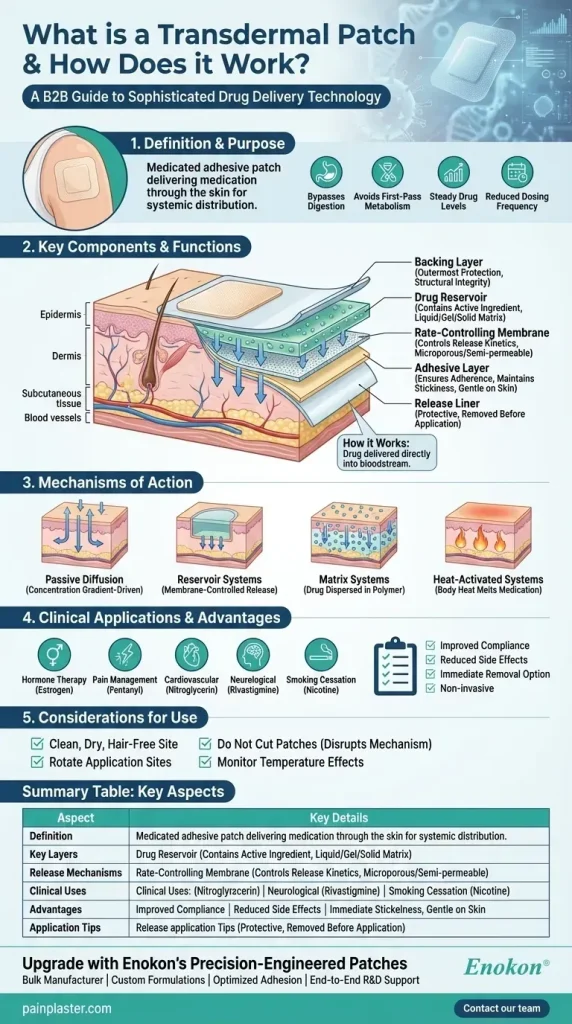
Transdermal patches are thin, adhesive-backed devices that deliver a drug through the skin and into the bloodstream. They are a hallmark of transdermal drug delivery systems (TDDS) and are designed to release a precise amount of medication over a defined period. Understanding how transdermal patches work helps explain their advantages, limitations, and how they fit into broader treatment plans.
In the transdermal drug delivery system, patches regulate how the medicine reaches systemic circulation through controlled release. Two common designs are reservoir patches and matrix patches. The mechanism relies on diffusion through the skin, with the outer stratum corneum being the primary barrier the drug must cross, and a rate-controlling layer helping maintain a steady plasma concentration.
Types of transdermal patches and their release mechanisms
Two major categories dominate today’s patches: reservoir patches, which hold the drug in a dedicated compartment and release it through a barrier or membrane, and matrix patches, where the drug is dispersed within a polymer matrix and diffuses out gradually.
Beyond these basics, there are specialized formats and evolving technologies such as microneedle patches and iontophoretic systems that enhance drug delivery. When clinicians refer to the types of transdermal patches, they consider release method, adhesion, wear duration, and the intended systemic or localized effect.
Benefits of transdermal patches for patient care
A key benefit of transdermal patches is the ability to maintain steady drug levels in the bloodstream, which can improve symptom control and reduce side effects associated with peak concentrations seen with some oral medicines.
Patches also offer convenience and better adherence: many patches can be worn for 24 hours or longer, reducing the need for multiple daily doses. By bypassing the gastrointestinal tract and, for some drugs, avoiding first-pass metabolism, patches can deliver reliable systemic exposure and improve tolerability.
Safety, side effects, and precautions with transdermal patches
As with all medical products, patches carry potential safety concerns. Local skin reactions such as redness, itching, or irritation at the application site are relatively common, and extreme reactions require medical advice or discontinuation.
Other considerations include proper dosing and wear time, avoiding heat or heavy sweating that can increase absorption, and checking for adhesive allergies. Storage, disposal, and monitoring for special populations (such as pregnant individuals or those with liver or kidney issues) are important parts of safe patch use.
Choosing the right patch: guidance for patients and clinicians
Selecting a transdermal patch involves evaluating the drug and dose, the patch type (reservoir vs matrix), and the intended wear duration. Clinicians also consider potential drug interactions, patient lifestyle, and whether systemic or localized delivery is desired.
Practical considerations include skin condition, pregnancy or breastfeeding status, age, and the need to rotate application sites to minimize irritation. Clear discussion about safety margins and monitoring helps ensure that TDDS fits the patient’s treatment goals.
The future of TDDS: innovations, challenges, and practical questions
Advances in materials science are driving thinner, more flexible patches with improved adhesives and reduced irritation. Emerging concepts such as microneedle patches and smart TDDS with real-time monitoring could expand the range of usable drugs and patient-friendly options.
As patch technology evolves, clinicians and patients may ask about long-term safety, the practicality of combining patches with other therapies, and how to troubleshoot adhesion or variable absorption in real-world settings.
Frequently Asked Questions
How do transdermal patches work to deliver medication as part of the transdermal drug delivery system (TDDS)?
Transdermal patches deliver drugs through the skin using a transdermal drug delivery system (TDDS). The patch may store the drug in a reservoir or disperse it through a polymer matrix; the medicine then diffuses across the skin’s outer barrier (stratum corneum) into capillaries and the bloodstream, aiming for a steady plasma level.
What are the types of transdermal patches and how do reservoir and matrix designs differ?
Transdermal patches come in reservoir and matrix designs. Reservoir patches release the drug through a separate layer that controls the rate, while matrix patches release the drug evenly within a polymer matrix. Both types are designed for steady systemic delivery or localized relief, depending on the drug and formulation.
What are the benefits of transdermal patches compared with oral medications?
Benefits include maintaining steady drug levels over time, improved convenience and adherence, avoidance of the gastrointestinal tract, and avoidance of first-pass liver metabolism. Some patches provide systemic delivery, while others offer targeted, localized relief.
What are the safety considerations and potential side effects of transdermal patches?
Common safety concerns include skin reactions at the patch site (redness, itching). Absorption can be affected by heat or sweating, and patch dosing should follow the prescribed wear time. Allergies to adhesives, proper storage and disposal, and considerations for pregnancy, elderly patients, or liver/kidney conditions should be discussed with a clinician.
What is the transdermal drug delivery system (TDDS) and how do patches fit in?
TDDS is a method of delivering drugs across the skin into the bloodstream. Transdermal patches are a primary device within TDDS, using reservoir or matrix designs, adhesives, and sometimes a rate-controlling membrane to provide a steady, predictable drug release.
How should you use transdermal patches correctly and what should you discuss with your clinician about TDDS?
Apply patches to clean, dry skin on non-hairy areas, rotate sites to avoid irritation, press firmly, and remove after the wear time. Do not cut patches unless advised. Discuss with your clinician the drug dose, wear duration, possible interactions with other medicines, and safety considerations for pregnancy, elderly patients, or organ conditions when using TDDS.
| Topic | Key Points |
|---|---|
| What are transdermal patches? | Thin, adhesive-backed devices that deliver a drug through the skin into the bloodstream, designed for controlled, steady release. Two main designs: reservoir patches (drug in a distinct layer) and matrix patches (drug dispersed in a polymer matrix). |
| How they work | Drugs cross the outer skin (stratum corneum) if sufficiently lipophilic and of suitable size. Key steps: drug reservoir (release), diffusion through skin, entry into systemic circulation. Patches use adhesives, backing layers, and sometimes a rate-controlling membrane to maintain steady blood levels. |
| Types of patches | Common examples include nicotine patches (smoking cessation), hormone patches (estrogen, testosterone), pain-relief patches (e.g., lidocaine), travel/nausea patches (scopolamine), and other systemic patches delivering various medications. |
| Benefits | Provide steady drug levels, offer convenience and adherence (wear for 24 hours or days), avoid the GI tract, bypass first-pass liver metabolism, and support either systemic or localized delivery as needed. |
| Safety and considerations | Watch for skin reactions, follow wear/dosing instructions, heat or sweating can increase absorption, be mindful of allergies to adhesives, store/dispose properly, and consider special populations (pregnant, elderly, liver/kidney issues) when selecting a patch. |
| How to use correctly | Apply to clean, dry skin on a non-hairy area; rotate sites; press firmly for 30 seconds; do not cut unless advised; remove after wear time and wash the area; avoid lotions/oils/powders at the site; if multiple patches, follow clinician guidance and keep sites separate. |
| Choosing and discussing with clinician | Consider drug/dose, patch type (reservoir vs matrix), wear duration, potential interactions with other meds or conditions, and safety in special populations; clinician helps select the appropriate patch. |
| Common myths | Myths about overly rapid drug delivery or long-term unsafe use exist; patches are designed with safety features and dosing controls; rely on healthcare professionals and labeling for guidance. |
| Limitations and future | Not all drugs can be delivered transdermally; factors include molecular size, lipophilicity, and formulation stability. Some medications may require higher doses. Future advances include better adhesives and microneedle patches for improved delivery. |
Summary
This table summarizes key points on transdermal patches: what they are, how they work, common types, benefits, safety considerations, usage guidelines, how to choose a patch with clinician input, myths, limitations, and future directions.