
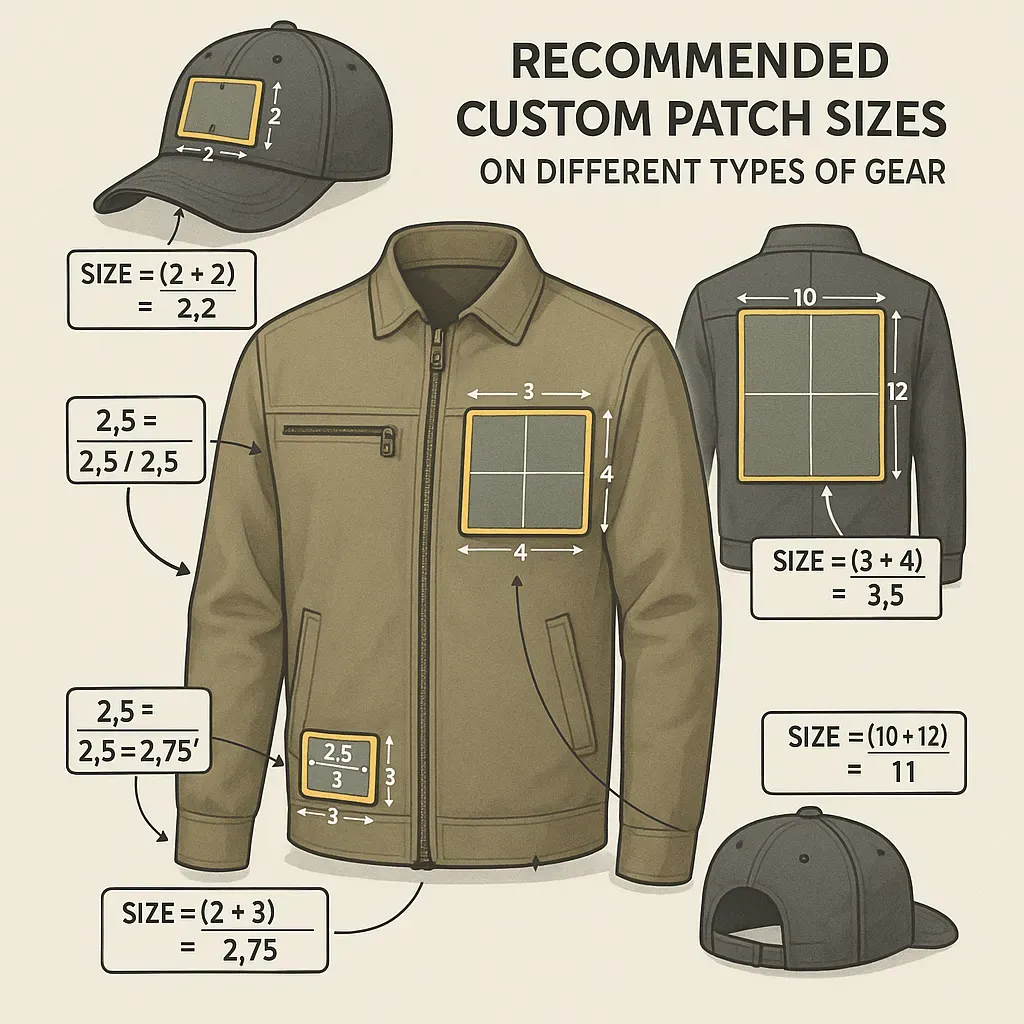
Patch size, shape, and placement are the cornerstone decisions that influence readability, durability, and the overall impact of a brand. Choosing the right dimensions helps patches read clearly on a variety of fabrics, aligning with a custom patches sizing guide. Different shapes and placements also affect production cost and wear, underscoring why patch placement guidelines matter early in design. For context, consider a flexible approach to edge finishes and backing while keeping the size appropriate for each garment, fabric type, and wearer activity. This approach supports a balanced, durable, and visually consistent patch program across your line, vendors, and customer touchpoints.
In other words, think about the footprint, silhouette, and positioning of patches as a system that governs legibility and durability. Considering dimensions, contours, and where the patch sits on garments helps ensure logos read consistently, whether on caps, jackets, or bags. LSI-friendly terms you might encounter include scale, form, and alignment, as well as substrate compatibility, backing choices, and wash performance. By framing the topic with related concepts, you can plan a cohesive patch program that scales across product lines while preserving brand fidelity.
Patch Size Essentials: Determining the Right Scale for Every Garment
Patch size is not just a preference—it is a design decision that affects readability, brand impact, and durability across washes. When you start a patch project, consider the viewing distance and garment type: subtle placements on sleeve cuffs or interior branding often work best at 1 inch to 1.5 inches in diameter or width, while left-chest logos on polos or jackets typically fall in the 1.75 to 2.5 inch range. For larger statements on the back of jackets or bags, aim for 3 to 5 inches to preserve embroidery detail without overwhelming the garment. These guidelines align with embroidery and sizing best practices found in the embroidered patches size guide.
Also consider the fabric canvas: lightweight tees or windbreakers may benefit from smaller patches to minimize sag, while heavier fabrics like denim or canvas can support larger patches with crisper edges. A general rule of thumb is to target a patch width or diameter that occupies roughly 8%–12% of the garment width for small items and 10%–15% of the panel area for larger items. When you scale down, fine details can blur, so you may simplify the design and choose a size that preserves legibility—this approach is part of a custom patches sizing guide mindset.
Shape Options that Elevate Your Patch Design
Shape options influence both readability and production efficiency. Circular patches read well on compact logos and badges; rectangular or square patches maximize space for typography; shield or badge shapes convey tradition and strength; and custom shapes can reinforce identity by closely following the logo outline. Use the patch shape options to balance aesthetic and edge-to-edge embroidery considerations.
Edge finishing interacts with shape: merrow borders provide durability around irregular contours, satin stitching helps the logo stand out at the edge, and heat-cut finishes suit nontraditional fabrics. The chosen shape should align with production methods and the intended environment to ensure the final edge feels clean and wears well.
Placement Guidelines for Maximum Brand Impact
Placement guidelines determine how quickly a viewer recognizes the patch and how comfortable the wearer remains. Common placements include left chest on apparel, right sleeve or cuff, hats, and bags. For left-chest patches, position about 3 to 4 inches below the collar or roughly 3.5 to 4 inches from the garment edge; centering the patch over the left chest seam often yields a clean, professional look.
Use a placement template or sizing chart to ensure uniformity across a product line and batch runs. Consistent alignment strengthens brand recognition and reduces the chance of distortion when washed or worn. For removable Velcro patches or patches that sit over seams, plan accordingly and test on real garments before mass production.
Backing and Attachment: Choosing the Right Fix for Your Patch
Backing options—iron-on, sew-on, Velcro—determine how the patch stays on and how care instructions affect longevity. Iron-on backing is quick and user-friendly, but you must consider iron-on patch positioning and heat settings; sew-on backing offers the most durability, while Velcro-backed patches enable easy logo swaps.
Careful matching to fabric weight and care instructions is essential. Heavier patches may need stronger backing and tighter stitching, while lighter patches on delicate fabrics require validation to prevent puckering. Adhesive extensions and hybrid options can provide a compromise between ease of use and durability, but always test adhesion on representative fabrics.
Design to Production: From Artwork to a Production-Ready Patch
From artwork to production, start with clean vector files to preserve sharp edges as you scale: logos and typography should be vectorized (AI, EPS, or SVG) to guide color stops and stitch counts. Limit color counts to reduce thread changes and production time, and if a design looks busy at large sizes, consider simplifying it for smaller patches—this approach aligns with the embroidered patches size guide and design best practices.
Iterate with prototypes and sampling to verify size, shape, placement, and finish before full production. Plan stitch density with a balance of fill, satin, and outline stitches; edge and border planning—merrow vs satin—depends on shape and environment; test colorfastness and fabric interaction through wash tests. A well-documented prototype run helps catch issues early and aligns with a custom patches sizing guide mindset.
Care, Longevity, and Common Pitfalls: Keeping Patches Looking New
Care and longevity: after choosing patch size, shape, and placement, ensure consistent performance through multiple washes. For iron-on patches, avoid high-heat drying and hot tumble cycles; for sew-on patches, maintain a tight stitch density and wash inside out to protect the patch edge. On bags and exterior packs, place patches away from high-friction seams to minimize wear.
Common mistakes to avoid include choosing a size that’s too small for legibility, ignoring fabric weave that can distort embroidery, and over-detailing that vanishes at smaller scales. Always test placement on real garments, perform a prototype run, and ensure alignment across batches to protect brand consistency.
Frequently Asked Questions
How can I use the embroidered patches size guide to choose the right patch size?
Use the embroidered patches size guide to balance readability and wearability across garments. Subtle branding on sleeves or interiors is often 1 to 1.5 inches, left-chest logos 1.75 to 2.5 inches, and back-panel patches 3 to 5 inches. Aim for a patch width or diameter that occupies about 8%–12% of the garment width on small items and ensure legibility from a distance. Prototype first to verify edge finish and typography before production.
What are patch shape options and how do they affect readability and production?
Patch shape options influence how a logo reads on fabric and how it ships to production. Circular patches suit symmetric logos, rectangular/square patches maximize typography space, shield/badge shapes convey heritage, and custom shapes reinforce identity but may require tighter edge finishing and more precise die-cutting. Choose a shape that complements the logo and works with the chosen edge finish for durability.
Where should patches be placed for maximum impact on apparel according to patch placement guidelines?
Follow patch placement guidelines to maximize recognition and comfort. Common placements include left chest (about 3–4 inches below the collar or aligned with the left chest seam), mid-arm on sleeves for visibility, front panels on hats about 1–2 inches from the bill, and centered patches on bags at eye level. Use a placement template to ensure consistent alignment across multiple items.
How do backing options impact patch size and placement, and what is important about iron-on patch positioning?
Backing options affect durability and wash performance, so choose based on fabric weight and use. Iron-on backing is quick and convenient but requires careful iron-on patch positioning to avoid heat damage; sew-on backing offers maximum longevity; Velcro backs enable removability. Test adhesive strength on representative fabrics and adjust patch size and placement accordingly.
How can a custom patches sizing guide help determine patch size and shape before production?
A custom patches sizing guide helps translate your logo into practical sizes and shapes. Start with vector artwork, then evaluate multiple patch sizes and shapes (per patch shape options) on target garments. Use a sizing chart to plan placement and ensure consistent results across production runs.
What common mistakes should be avoided when choosing patch size, shape, and placement?
Avoid sizing patches too small for legibility or too large for the garment area, ignoring fabric weave and edge finishes, and selecting overly intricate details that blur when scaled. Don’t skip prototype testing, especially on curved surfaces or pockets, and avoid inconsistent placement across products—use patch placement guidelines to maintain brand coherence.
| Aspect | Key Points |
|---|---|
| Patch Size | – Subtle placements: 1 to 1.5 inches in diameter/width for sleeve cuffs, collar tips, or interior branding; balances readability and subtlety. – Left chest or small logos: 1.75 to 2.5 inches for legibility without bulk. – Back of jackets/bags: 3 to 5 inches for bold presence while preserving embroidery quality. – Hats/caps: 1.25 to 2 inches to stay noticeable without overpowering the silhouette. – Garment canvas considerations: lighter fabrics may need smaller patches; heavier fabrics can support larger patches. – General sizing guidance: aim for patch width/diameter about 8%–12% of garment width (small items) or 10%–15% of panel area (larger items); for distance viewing, simplify design for clear edges and legible typography. |
| Shape Options | – Circular patches: read well at small sizes; great for symmetric logos and badges. – Rectangular/Square patches: maximize space for typography and fine line work on larger patches. – Shield/Badge shapes: convey tradition and strength; suit heraldic logos. – Custom shapes: reinforce identity by following logo outline or using negative space; may require precise die-cutting and edge finishing. – Edge finishing: Merrow borders for durability on irregular shapes; satin stitching near the edge; heat-cut finishes for non-traditional fabrics. |
| Placement Guidelines | – Left chest: common for business/club patches; position ~3–4 inches below collar or ~3.5–4 inches from garment edge; center with left chest seam for smaller patches. – Right sleeve/cuffs: place mid-arm or at cuff with clearance to prevent fraying; consider arm length and sleeve type. – Hats/front panels: center patch ~1–2 inches from lower edge of bill; ensure visibility during motion. – Bags/backpacks: center on front panel at eye level; multiple patches can align with seams for balance. – Seam considerations: patches over seams may shift after washing; test placement with a sample garment. |
| Backing Options & Attachments | – Iron-on: easy application; suitable for garments washed moderately; test heat application and cooling; heat exposure over time can affect adhesive. – Sew-on: most durable; good for uniforms/outdoor gear; tight satin or zigzag stitches recommended. – Velcro-backed: removable patches; ensure compatibility with fabric weight and mating Velcro pieces. – Adhesive extensions/hybrids: light adhesive plus sewn edge; test adhesion to ensure wash durability. |
| Edge Finishing | – Edge types interact with shape/size; merrow borders provide durable, clean finishes for irregular shapes. – Satin stitching near edges helps logo pop; heat-cut finishes suit non-traditional fabrics. |
| Production & Design Considerations | – Use vector artwork (AI, EPS, SVG) to preserve sharp edges during scaling. – Limit color counts to reduce costs and keep consistency. – Manage stitch density: denser for small patches, more open space for larger patches; balance with legibility. – Plan edges and borders (merrow vs satin) to suit shape and size; conduct wash tests on representative fabrics. – Prototyping: request a prototype to check size, shape, placement, and finish before full production. – Avoid overly fine details that vanish at small sizes; simplify design for moving subjects. |
| Care & Longevity | – Iron-on: avoid high-heat drying to preserve adhesive. – Sew-on: use tight stitch density; wash inside out to minimize edge abrasion. – Place patches away from high-friction seams on bags or packs to reduce wear and facilitate replacement. |
| Common Mistakes | – Choosing sizes that are too small for readability or too large for garment area. – Ignoring fabric texture/weave that can distort embroidery or color blocks. – Including overly intricate details that blur at small sizes. – Not testing placement on real garments (curved surfaces, pockets). – Skipping prototypes, risking misalignment or edge fraying in mass production. |
Summary
Patch size, shape, and placement drive readability, durability, and brand impact across embroidered, iron-on, and Velcro-backed patches. A well-designed patch program considers backing options, edge finishes, and production realities, and emphasizes prototyping to catch issues before mass production. By aligning patch size, shape, and placement with garment type and use, you ensure patches remain legible, durable, and visually consistent across your product line. Careful attention to these decisions, along with clear design processes, strengthens brand identity and longevity for embroidered patches, iron-on patches, or Velcro-backed patches.