
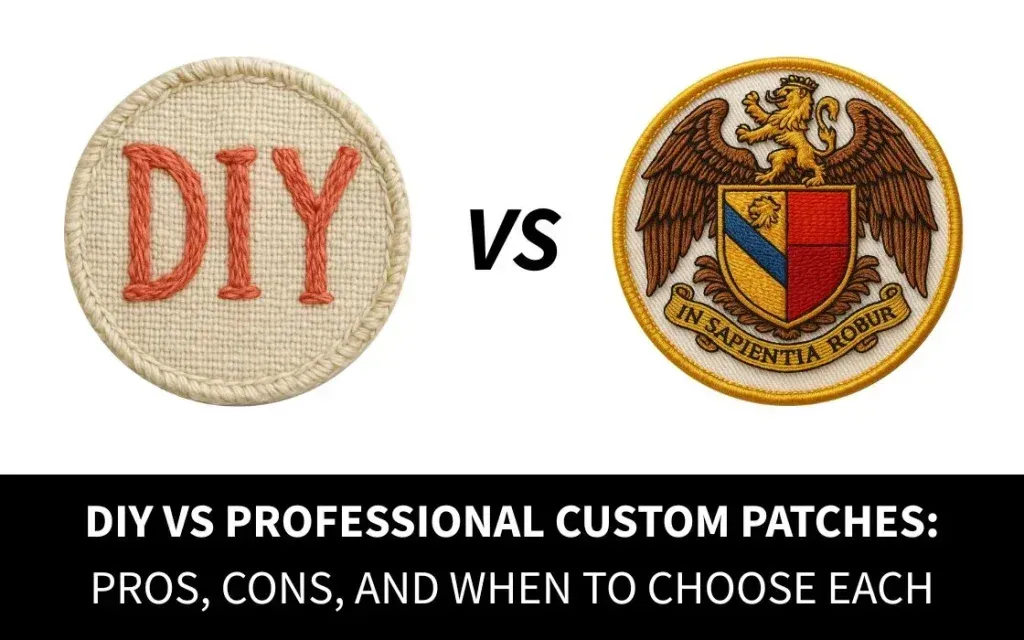
Custom patches DIY vs professional decisions shape how makers, bands, clubs, and small brands bring their ideas to life. Whether you want a one-off design for a fan project or a full run for merchandise, understanding the tradeoffs between DIY custom patches and patch manufacturing helps you avoid costly missteps. In this guide, we compare hands-on methods like sew-on patches and iron-on options with professional services that deliver embroidered patches, PVC patches, and woven patches. You’ll learn how durability, color fidelity, minimums, and timelines influence whether DIY or a pro setup is the smarter choice. By the end, you’ll have a clear framework for choosing the best path for your next batch of patches.
Viewed from another angle, the choice reads as handmade patches versus factory-backed production, or small-batch patch creation versus professional patch services. This framing links related concepts such as embroidered patches, sew-on patches, PVC patches, and patch manufacturing, aligning them with durability, color accuracy, and branding goals. Whether you’re testing concepts for a band tour or launching a merch line, the decision hinges on volume, lead times, and the level of customization you require.
1) Custom patches DIY vs professional: choosing your path for your project
Custom patches DIY vs professional presents a crossroads that affects cost, speed, and control. When you weigh DIY against patch manufacturing services, you consider not just the initial outlay but the long-term implications for consistency and branding. This decision is central to whether you’re producing a single fan patch or a full merchandise line that represents your band, club, or brand.
By framing the choice around your design complexity, needed durability, and timeline, you can map out a practical path. DIY patches give you hands-on control over details like embroidered texture, backing, and finish. However, professional options bring scalable production, standardized color matching, and reliable MOQs that support larger campaigns.
2) Durability and finishes: embroidered patches vs PVC patches
Durability and feel are major differentiators between embroidered patches and PVC patches. Embroidered patches deliver a classic textile look with tactile stitching and defined borders, which many brands associate with authentic craft. PVC patches, on the other hand, offer a smooth, resin-backed surface that can resist wear and washing while presenting a bold, three-dimensional appearance.
When you plan for long-term use—on workwear, sport gear, or heavy-rotation merchandise—PVC patches can stand up to scrapes and repeated washing better than some fabric-based options. Embroidered patches can be superb for premium aesthetics and subtler color detail, especially when color matching and thread density are tightly controlled by a patch manufacturer.
3) Budgeting and timing: DIY costs versus professional patch manufacturing timelines
Budgeting for patches involves balancing upfront material costs, labor, and potential waste. DIY work tends to have lower upfront costs per unit for very small runs, particularly when you already own the tools. As volume grows, the per-unit cost of DIY patches rises due to time, thread, backing, and maintenance of equipment.
Professional patch manufacturing introduces higher per-unit costs but often lowers risk through proven processes, color fidelity, and predictable lead times. Turnaround is driven by proofs, dye lots, and batch production, which can dramatically reduce delays for larger launches or multi-sKU campaigns.
4) Backing and attachment options: sew-on, iron-on, and self-adhesive patches
Backing type defines how patches will be affixed to garments or gear, influencing durability and ease of use. Sew-on backs require stitching and offer high durability, while iron-on backs provide quick application with heat. Self-adhesive or peel-and-stick backs can simplify distribution but may vary in long-term adhesion and laundering performance.
Choosing the right backing also affects care instructions and lifecycle. Sew-on patches generally tolerate more rigorous washing, while iron-on patches rely on heat-activated adhesives that can degrade with repeated washing. A professional patch manufacturer can tailor backing options to your production plan and end-use environment.
5) Design to production: proofing, color matching, and the role of patch manufacturing
A smooth path from design to production begins with clean vector art, a clear color palette, and defined patch size. For branded patches, professional services can provide color proofs and dye lot matching to ensure consistency across hundreds or thousands of units. This process is central to upholding your brand’s visual integrity in large rollouts.
Patch manufacturing involves more than stitching a design; it encompasses edge finishing, underlay materials, and border style (Merrow, heat-cut, or ironed-edge options). By validating proofs before mass production, you reduce the risk of color drift or misalignment, ensuring that embroidered patches or PVC patches meet the target look.
6) Practical steps for DIY and for going pro
If you’re opting for DIY, start with a clear design, vectorize artwork, and limit your color palette to a feasible number of threads or inks. Test production-grade blanks with similar backing and fabric to assess durability and appearance. Plan finishing and attachment methods early to avoid bottlenecks in your workflow.
If you decide to go with professional patch manufacturing, select a vendor with a relevant portfolio, request samples, and set up proofs before mass production. Provide artwork in vector format with explicit color codes and specify the required backing, border style, and packaging needs. A professional partner can offer MOQs aligned with your budget and scale, helping you deliver consistent, brand-aligned patches at volume.
Frequently Asked Questions
For custom patches, how does DIY vs professional patch manufacturing impact embroidered patches in terms of cost, quality, and turnaround?
DIY patches can be cheaper upfront for very small runs and offer hands-on control, but achieving consistent color, border precision, and wash durability across many patches is challenging. Professional patch manufacturing delivers consistent embroidery quality, exact color matching to codes, durable borders, and reliable lead times for larger runs. Consider your quantity, branding standards, and required finish to choose the best path.
Can PVC patches be reliably produced with DIY methods, or is patch manufacturing necessary for professional results in custom patches?
DIY PVC patches are typically impractical because they require resin molds, curing, and precise edge finishing. Patch manufacturing specializes in durable PVC patches with consistent texture, color, and edging, making it the better option for branded items that demand longevity.
When choosing between sew-on patches and iron-on finishes for custom patches DIY vs professional services, what should you consider?
Sew-on patches offer long-lasting durability through stitching, while iron-on finishes are faster to apply but can lift with repeated washing. Many professional services provide both backing options, ensuring consistent attachment and finish across batches.
How important are proofs, color accuracy, and MOQs in embroidered patches when comparing DIY custom patches vs patch manufacturing?
DIY projects often lack formal proofs and strict color controls, which can cause color mismatches. Patch manufacturing provides color proofs, standardized dye lots, and defined MOQs to support branding accuracy across runs.
What factors about patch size and detailing affect outcomes in embroidered patches when comparing DIY custom patches vs professional patch manufacturing?
Smaller details and many colors are harder to reproduce consistently with DIY patches, especially for embroidered patches. Professional patch manufacturing delivers precise borders, color fidelity, and uniform sizing, making it better for larger runs.
What practical steps should a creator take to choose between DIY patches and professional patch manufacturing for their next run of patches?
Define quantity, required durability, and branding goals for your custom patches; test with a small batch; request samples or proofs from patch manufacturers; compare MOQs, pricing, lead times, and packaging options to pick the best approach.
| Aspect | DIY patching | Professional patch services | Key takeaway |
|---|---|---|---|
| Definition / Scope | Creates patches in-house or with limited outsourcing, using sew-on, iron-on, or printed patches; suitable for small runs; hands-on design and production; rapid iteration. | Patches produced by a dedicated manufacturer for mass production and consistency; professional finishes, proofs, packaging options. | DIY offers control and speed for small projects; pro offers scale and uniformity for larger launches. |
| Techniques / Capabilities | Embroidered, heat-transfer/iron-on, or basic printed patches; possible to outsource proofing to local shops; flexible but hands-on. | Embroidered, PVC (resin), woven, and printed patches; textured borders, Merrow/heat-cut edges, glow-in-the-dark or metallic threads. | DIY provides flexibility; pro provides a broader toolkit and premium finishes. |
| Materials / Backing | Backing fabrics, heat-activated adhesives, iron-on films, embroidery threads; material quality affects durability and washability. | Wide range of backing types and fabrics; multiple patch shapes and thicknesses; varied finishing options. | Material choice affects durability and appearance, but pro options support more consistent outcomes. |
| Cost | Low upfront for small runs; labor and materials add up with volume; scalable but less efficient for large orders. | Higher per-unit costs but includes finishing, color fidelity, and consistent sizing; MOQs and setup fees may apply. | For smaller projects, DIY can be cheaper; for large runs, pro often reduces waste and improves predictability. |
| Quality / Durability | Quality varies with setup; may be harder to achieve uniform color and borders across many patches; durability depends on methods and launderability. | Higher consistency, color matching, durable borders; PVC and specialty finishes available; professional QC and color standards. | Pro typically offers crisper detail and longer-lasting finishes; DIY suits experimentation and small-scale projects. |
| Turnaround / Scale | Fast iterations and small batch production; potential bottlenecks if orders scale; schedule is flexible. | Predictable lead times, certified proofs, and scalable production from small to large runs; MOQs may apply. | Choose DIY for speed in small projects; choose pro for scheduled launches and large-scale needs. |
| When to Choose | Small quantity, tight budget, hands-on customization, quick testing; want full control over design and process. | Large quantity, need durability and brand-grade finish, precise color matching, or branded packaging; scheduled launches. | Use DIY for intimate projects or quick tests; use pro for broader rollout and brand consistency. |
| Practical Tips (DIY) | Finalize design (vector format), manage color palette, test on production-grade blanks, plan finishing and attachment method. | Request samples and proofs, confirm MOQs and pricing, check packaging/label options, consider licensing and care instructions. | Follow the tips for your chosen path to maximize reliability and alignment with branding. |
| Case Studies | DIY success: small skate crew with a limited run; control and quick distribution. | Pro success: small clothing brand with embroidered and PVC patches; color consistency and reliable lead times. | Demonstrates how scale and finish drive the choice. |
Summary
Conclusion: Custom patches DIY vs professional is a decision that hinges on scale, budget, and timeline. DIY patches are ideal for small runs, hands-on customization, and rapid iteration when you want intimate control over design and process. Professional patch services excel in delivering consistency, durability, and a polished finish for larger orders, brand-grade patches, or products that must endure heavy use. By evaluating quantity, durability, lead time, and total cost, you can determine the right path for your project and ensure your patches align with your brand. Whether you start with a DIY approach for a tight-knit project or partner with a patch manufacturer for a broader rollout, the result should be patches that look sharp and stay true to your brand over time.